
IV Wellness
The useful drips are narrower
than the menus make them look.

The honest pitch
Skips the gut entirely, which matters a lot more in some situations than others.
Genuinely useful in a few spots
Most lounges won't tell you where useful stops and expensive theater starts, because that line cuts into what they can sell.

Where IV actually pays off
A bad flu when you can't keep fluids down.
What actually works
Useful when oral really can't do the job.
Too sick to keep fluids down, a compound with terrible oral absorption, a real gut problem, or a drug that doesn't exist in pill form, that's the short list, and it's shorter than the menu makes it look.
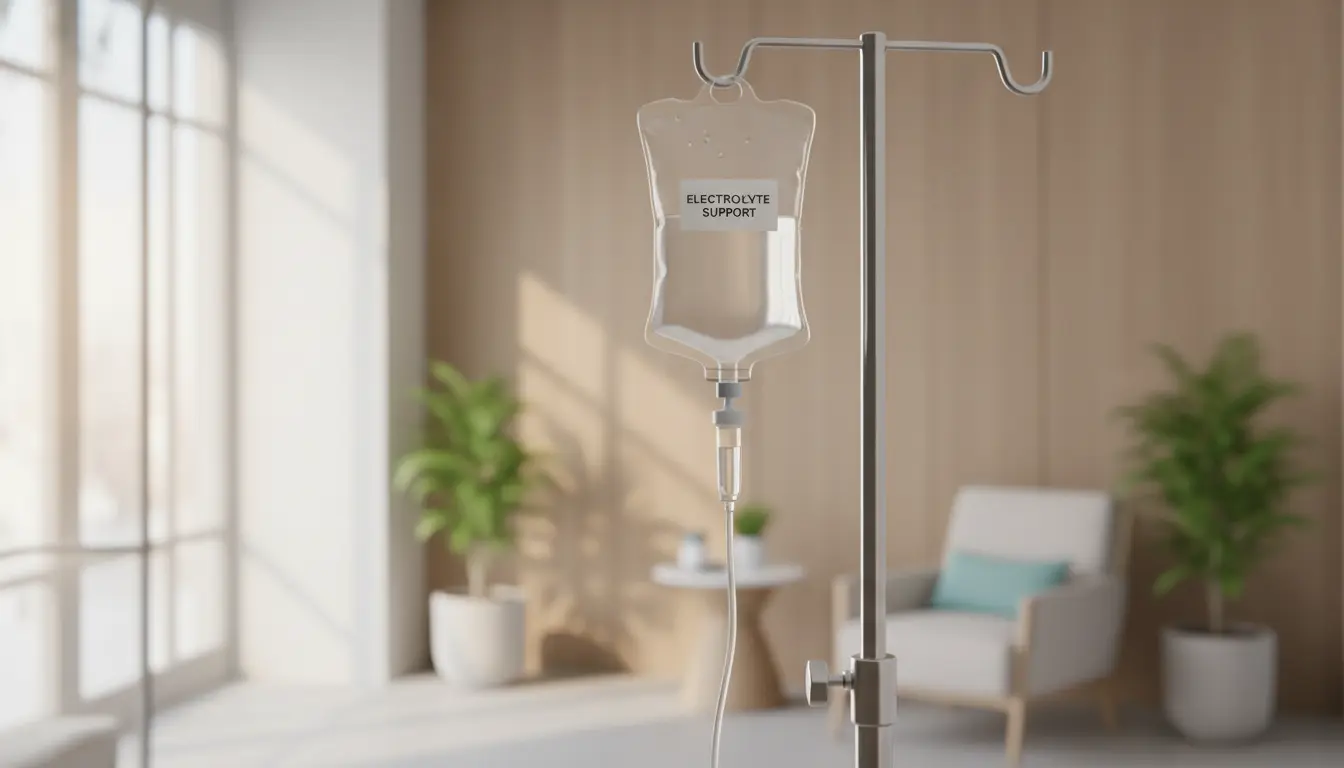
We test first
If your levels are already normal, the extra comes out in your urine and you paid for the privilege.
1-5%
of a swallowed B12 pill is roughly what you absorb, where the IV route gets you 100 percent, immediately. A standard drip runs 45 to 60 minutes, a liter of saline in around forty if we open it up.
A different category entirely
Ketamine for depression is real medicine with real evidence, screening, and follow up, not something off a B12 menu with no workup.
In person, WA and OR, real prescriber on premises
Send a note and get an honest answer
Talk to a prescriberProcess
What working with us looks like
A real prescriber on premises
In clinic, with compounds from licensed pharmacies, not whatever a wellness distributor ships in bulk to a strip mall.
A brief screen first
Renal function, allergies, current meds, pregnancy status, the basic stuff that keeps a simple visit simple.
Honest talk about the drip
If ten minutes tells us the real problem is your sleep, we'll say so, and you'll know what the bag will and won't do.
Ketamine treated like medicine
Full psychiatric workup, screening, consent, and a real plan between infusions, because it's not the same thing as a vitamin drip and we don't run it like one.
What It Actually Is
IV therapy is just a way to skip the gut entirely and put whatever you're taking straight into your blood, which matters a lot more in some situations than others, because your gut is genuinely bad at absorbing certain things, especially if you're dehydrated, hungover, sick, taking something that competes for the same transporter, or just genetically a poor absorber of whatever supplement you're paying twenty bucks a bottle for. Bioavailability is just the word for how much of the dose actually ends up doing anything. Swallow a B12 pill and you might absorb 1 to 5 percent of it. Run it IV and you absorb 100 percent, immediately, no questions asked.
For some situations that absorption gap matters a lot, and for most others you're paying for expensive urine. Most lounges popping up in strip malls are not going to tell you the difference because the difference cuts into their margin. People come in for a handful of things, the studies can back some of them and not others, and the difference between the right tool and an expensive experience is worth knowing.
I'm not anti IV, some of it genuinely works and the right situation makes it the obvious call. The marketing is mostly a hustle. If we're being honest the boring version is the one that actually helps: treat the dehydration, replace the real deficiency, and most of the rest is a nice hour in a chair with a needle in your arm.
The whole pitch, plainly
- It skips the gutBioavailability is just how much of the dose actually does anything, so a swallowed B12 pill may be 1 to 5 percent while IV is 100 percent.
- Handy in a few spotsThat absorption jump matters when the gut can't do the job, and it matters a lot less when the menu is selling a general glow.
- The margin problemMost lounges won't tell you where useful stops and theater starts, because that line cuts into what they can sell.
What people come in for
- Hangover recoveryThe one that works the way you'd expect, because what you're treating, the dehydration, is real.
- Immune and athleticHazier. Replacing a real deficiency helps, dumping more into normal levels mostly makes your urine expensive.
- Skin and beautyWhere the skepticism lives. Glutathione and biotin as a cosmetic IV is mostly buying a story.
- Low-dose ketamineThe serious one. A real psychiatric intervention, not a wellness drip, and it needs a real workup.
What People Actually Come In For
Hangover recovery is the big one. People show up the morning after, dehydrated and miserable, and want a bag of fluid with some B vitamins and an anti nausea med. Honestly, this one works because the thing you're treating is real. You're dehydrated, your electrolytes are off, your blood sugar is wobbly, and your gut is in no mood to absorb water through swallowing. IV fluid fixes the dehydration in about an hour, an antiemetic kills the nausea, and a little dextrose plus B complex gets you back to functional. You're replacing what you lost, and your gut was too wrecked to absorb it on its own, which is about as complicated as it gets.
Immune support is the second one and this is where things get hazier. High dose vitamin C and zinc drips get marketed as cold and flu prevention, and here the studies are pretty clear in a way the marketing isn't. The big Cochrane review on vitamin C and the common cold (Hemilä, regularly updated, the one everybody cites) found that taking it regularly doesn't stop you from catching colds in the general population, shortens the ones you do get by only a small amount, and does basically nothing when you start it after symptoms are already going. And that's just the oral data, the IV version specifically barely has anything to point to. So if you're deficient in something, replacing it genuinely helps. If your levels are already normal, dumping more in mostly makes for expensive urine. Plenty of people still swear they feel better after an immune drip during a rough week, and I don't think they're lying, I just can't point you to a trial that backs the part beyond the fluids and the rest. Where this one has more honest legs is during an active infection in someone whose oral intake has tanked, because then you're at least keeping them hydrated while their body does its thing.
Athletic recovery is the third bucket. Lots of guys come in after a hard training block or a Ragnar Relay or a CrossFit weekend, wanting amino acids, B vitamins, magnesium, and saline to flush things out. The fluid and electrolyte piece is real, especially in hot weather. The amino acid story is less impressive, since you can eat protein and get the same building blocks for cheaper. Magnesium IV is interesting if your cramps are bad and oral magnesium tears up your stomach, which it does for a lot of people, though honestly, the cramp evidence is mostly experience and not much trial data. Where IV magnesium actually has the goods is a setting nobody markets it for, a bad asthma attack in the ER. The Cochrane review on it (Kew and colleagues, 2014) found a single IV dose cut hospital admissions by about a quarter in adults who weren't responding to the usual inhalers. That's the kind of clean result the wellness menu never mentions, because it has nothing to do with feeling glowy on a Saturday.
Skin and beauty drips are the fourth bucket and this is where I get the most skeptical. Glutathione gets sold as a brightener, biotin gets sold as a hair thickener, and the data on either of those doing anything cosmetic from an IV is weak. Glutathione has real value as an antioxidant for the liver and for oxidative stress, which is a different argument. As a beauty hack, you're mostly paying for the ritual, and that's worth knowing before you drop two hundred bucks on a bag labeled glow. There's also a safety wrinkle worth saying out loud, because the skin lightening pitch is the one that actually hurts people. Injectable glutathione isn't FDA approved for any of this, and the FDA has flagged that compounding it into a sterile injectable carries real risk, including a batch where patients got sick from endotoxin contamination. So the skin whitening claim isn't just weak, it's the one corner of this whole topic where the wrong product can land you in the hospital.
Low dose ketamine is the fifth and most clinically serious one. This is not a wellness drip, this is a real psychiatric intervention with real evidence behind it for treatment resistant depression and certain pain syndromes. It needs a real prescriber who does a real workup, monitors you during the infusion, and has a plan for after. If a med spa is offering ketamine alongside their B12 menu with no psychiatric workup, that's a problem and you should leave.
What It Won't Do
Anyone pitching a B complex drip as the answer to depression, anxiety, ADHD, chronic fatigue, low testosterone, or burnout is either lying or hasn't read anything published in the last twenty years, because those things need actual diagnostics and actual interventions, not a bag of vitamins and a chair, and if you're dragging yourself through your days while somebody sells you a fatigue drip without asking about sleep, labs, training load, and meds, they're billing you before they figure out what's wrong.
For specific problems it's the right call, and for everything else you're mostly paying for a nice hour in a chair, which is fine to know going in, but it doesn't fix the actual thing.
Fluids after a weekend of three hours of sleep and gas station food will get you through Monday, and then Tuesday you're right back where you started.
What it won't fix
- An actual illnessAnyone pitching a B complex drip as the answer to depression, anxiety, ADHD, or chronic fatigue hasn't read anything published in the last twenty years, and you should probably leave.
- The upstream problemThyroid, testosterone, sleep apnea, and burnout all need real diagnostics, not a fatigue drip with no questions asked.
- A bad week of habitsThree hours of sleep, daily drinking, and gas station food can feel better after fluids, but the same mess comes back if nothing upstream changes.
The science
Which compounds actually have data
NAD plus, the compound people refer to as N A D, has the biggest gap between what patients report and what the trials have shown so far. The marketing leans on cognitive fatigue, long covid, chronic fatigue, even early neurodegenerative work, and the honest read is that the controlled trials have mostly come up short. The randomized study people point to in long covid raised NAD levels just fine but didn't beat placebo on fatigue, brain fog, sleep, or mood, and the IV route specifically barely has human trials at all. What it does have is a lot of people who swear an infusion course pulled them out of a fog, and I'm not going to tell them they imagined it. I'll just tell you the trial data hasn't caught up to the testimonials yet. NAD is not a miracle drug, it burns going in if you push it too fast, and a full course is expensive enough that you're weighing real money against evidence that's still mostly testimonials.
Glutathione has the best data when you're using it for liver support, for oxidative stress in people with serious chronic inflammation, and as an adjunct for some neurological conditions. It's also a real piece of the picture in heavy training or heavy drinking lifestyles where the liver is taking a beating. The skin lightening claims are not where the science sits, no matter how the wellness lounges market it.
B complex is a real one too, especially in people who drink regularly, who eat a restricted diet, who are on metformin or a PPI long term, or who have any kind of malabsorption. Replacing what's missing helps, and if your levels are already normal, the extra just comes out in your urine and you paid for the privilege. The way to know is to actually test, which most lounges don't bother with.
Ketamine for depression has randomized, replicated trial evidence and a mechanism that actually holds up under scrutiny, which puts it in a completely different category than the rest of this page. It's not for everyone and it needs follow up, but for the right person with treatment resistant depression it can actually work when nothing else has.
High dose vitamin C, biotin for hair, IV magnesium for general wellness, and the various branded blends with names like Myers and Glow and Hangover Hero, the honest answer is that the trial evidence is thin and the effect is short. The Myers cocktail is the clearest example, because somebody actually ran the placebo controlled trial (Ali and colleagues, 2009, in fibromyalgia patients). The people who got the real cocktail felt better. The people who got plain fluid felt better too, and the two groups didn't separate. One study, and it basically tells you everything the wellness drip industry doesn't want you to know. You might genuinely feel better, and a lot of that's the saline and an hour of sitting still, not the branded cocktail.
When IV is the right tool
- Oral can't keep upToo sick to keep fluids down, a compound with terrible oral absorption, or a drug that doesn't exist in pill form.
- A gut that doesn't absorbCrohn's, post bariatric, malabsorption, chronic PPI use, or a need for a controlled rate the gut can't give you.
- The narrow legit listA hangover before a meeting you can't miss, a bad flu, a stubborn NAD case, glutathione in a hard training block, ketamine with a workup.
What Actually Works
IV is the right tool when oral can't do the job, and that's a shorter list than the menu makes it look. You actually need the infusion route when somebody is too sick to keep fluids down, when a compound has terrible oral bioavailability and the dose you would need to swallow is unrealistic, when somebody has a gut absorption problem (Crohn's, post bariatric, malabsorption, chronic PPI use), when you're giving a drug that simply doesn't exist in an oral form, or when you need a controlled rate of administration the gut can't give you. IV iron for genuine iron deficiency is the textbook case here, the one drip on this whole page with both an FDA approval and a guideline telling you to use it when oral iron doesn't work or wrecks the patient's stomach. You'd confirm it with a blood test first, not just pick it off a menu.
Outside those situations, the oral version is usually fine and a lot cheaper. If you're tired and dragging, you probably just need sleep and actual food before you need a drip. If your B12 keeps running low, a sublingual or an intramuscular shot once a month does the same job as a full IV at one twentieth the cost. Magnesium for cramping, a glycinate at bedtime works for most people, and that beats the drip on cost and hassle. Vitamin C for immune season: real food and actual sleep beats a thousand dollar drip series every time.
The places where IV pays for itself are narrower than the industry says and broader than the skeptics say: a serious hangover before a meeting you can't miss, a bad bout of flu when oral intake has fallen off a cliff, a specific NAD course for a stubborn cognitive fatigue case, glutathione during a long training block with documented oxidative stress, or ketamine for treatment resistant depression with the appropriate workup.
How We Do This
In clinic, with a real prescriber on premises, with compounds sourced from licensed compounding pharmacies, not from whatever wellness distributor will ship in bulk to a strip mall storefront. Every patient gets a brief screen first, because dropping somebody on a chair, sticking a needle in, and pushing a bag of mystery cocktail without checking renal function, allergies, current meds, and pregnancy status is how people get hurt. The screen takes five minutes, and the lounges that skip it are the ones that end up hurting somebody.
You can still get the drip, but you'll know what problem it's actually solving.
We're also going to be honest with you about whether the drip you're asking for is the right tool. If you want a hangover bag and you're otherwise healthy, great, we'll run it and you'll feel better. If you come in asking for a fatigue drip and it takes about ten minutes to figure out you've been sleeping five hours a night for two months, we're going to say so, and we'll figure out what's actually wrong before we talk about the bag. You can still get the drip if you want it, you're just going to know what it will and won't do.
If you're coming in for ketamine, that goes through the full psychiatric workup, a real conversation about what you're getting into, and a plan for what happens between infusions and how you'll know if it's doing anything. That part isn't optional, and if a place is running ketamine off the same menu as their B12 drips with no workup, leave.
How it goes
From first message to the chair
Send a note about what you're after, a real clinician reads it and writes back, not a front desk trying to sell you a package.
A brief screen for renal function, allergies, meds and pregnancy status, plus an honest read on whether the drip you want is the right tool.
Run the bag if it fits, point you upstream if it doesn't, and for ketamine, the full workup and a plan that doesn't end at the infusion.
Real talk
IV questions we get a lot
Will a drip actually fix my fatigue?
Probably not on its own. If you've been sleeping five hours a night for two months, a fatigue drip patches the surface for a day and the mess comes back. We'll tell you that, talk about the actual problem, and you can still get the drip if you want it, knowing what it will and won't do.
How long does a visit take?
Plan for forty five minutes to an hour for most standard drips, since a liter of saline runs in around forty minutes if we open it up. NAD plus is the long one at two to four hours, because we run it slow on purpose or it gets uncomfortable.
Is the immune or beauty stuff worth it?
Depends. Replacing a real deficiency helps, but dumping vitamin C or biotin into normal levels mostly makes your urine expensive, and the cosmetic claims for glutathione and biotin from an IV are weak. The way to know is to actually test, which most lounges don't bother with.
Can I just walk in and get ketamine?
No, and you should leave anywhere that lets you. Ketamine for depression is real medicine with randomized evidence behind it, so it goes through a full psychiatric workup and a plan between infusions. If a place treats it like a vitamin drip, leave.
From people who actually came in
What Patients Are Saying
Did the whole thing on telehealth from Vancouver because driving over the bridge for a 30-minute appointment is a non-starter. Worked totally fine, labs done locally, follow-ups on the portal, didn't feel any worse than going in person honestly.
Drew, 39Came in for one thing, ended up addressing about three things over the next six months because once you actually start talking to someone who's listening, more stuff comes out. Wasn't planning on that but it's been a net good.
Matt, 41Honestly the thing that got me to book was the form. It wasn't 90 questions about my grandmother's medical history, it was just the basics. Lowered the bar enough that I actually finished it instead of bailing halfway like I usually do.
Kyle, 36
If you want an honest read on whether IV will help
Send a note. A real clinician reads it and writes back within a business day, and you'll get an honest answer about whether a drip will actually help you or whether you're better off spending the money on sleep, food, and a primary care visit.
Sources
- Oral B12 passive absorption (~1% of dose) vs injection: ods.od.nih.gov
- Vitamin C and the common cold (no prevention in general population, ~8% shorter colds), Cochrane review: PMID 23440782
- IV magnesium sulfate cut asthma admissions ~25%, Cochrane review (Kew et al., 2014): PMID 24865567
- Compounded injectable glutathione: not FDA-approved, documented safety risks, FDA drug compounding: www.fda.gov