
About the practice
Psychiatric care
that talks to you
like a person.
What we're actually doing here
Not a conveyor belt
Most psychiatry in this country has been hollowed out into a quick refill where the prescriber barely looks up from the screen. That's the version we're explicitly not running.
If you've been through that mill before and walked out feeling like you got processed instead of treated, that's the thing we're trying to fix. LiveWell Psychiatry and Men's Health is the clinic. It's small on purpose.
The first visit is forty five to sixty minutes, not fifteen, and we use that time to actually figure out what's going on instead of pattern matching you to whatever diagnosis pops out of the first ten minutes.
We'll ask about sleep and substance use and your job and your relationships and your history, not because we're filling out a form but because that's where the answers usually live.
We're also not going to talk to you in clinical bureaucratese.
If you've got a question about a medication, you'll get a plain English answer about what it does, what side effects to actually watch for, and what we'd do if it doesn't work, instead of a brochure-voice non-answer.
If we don't know something, we'll tell you. If something the field is doing seems sloppy to us, we'll tell you that too.
The other thing worth saying up front: medication isn't the whole answer, and we're not pretending it does.
A real chunk of our patients aren't on anything at any given time, because they don't need to be, and forcing pills into a problem that's actually about sleep and alcohol and a job you hate is bad medicine.
When meds help, we use them, and we use them honestly. When they're not the right tool, we say so.
A lot of this work is helping people stop lying to themselves about what's working, what isn't, and what they'll do about it. The prescription pad is a tool. It's not the cure, and it's not a substitute for changing things.
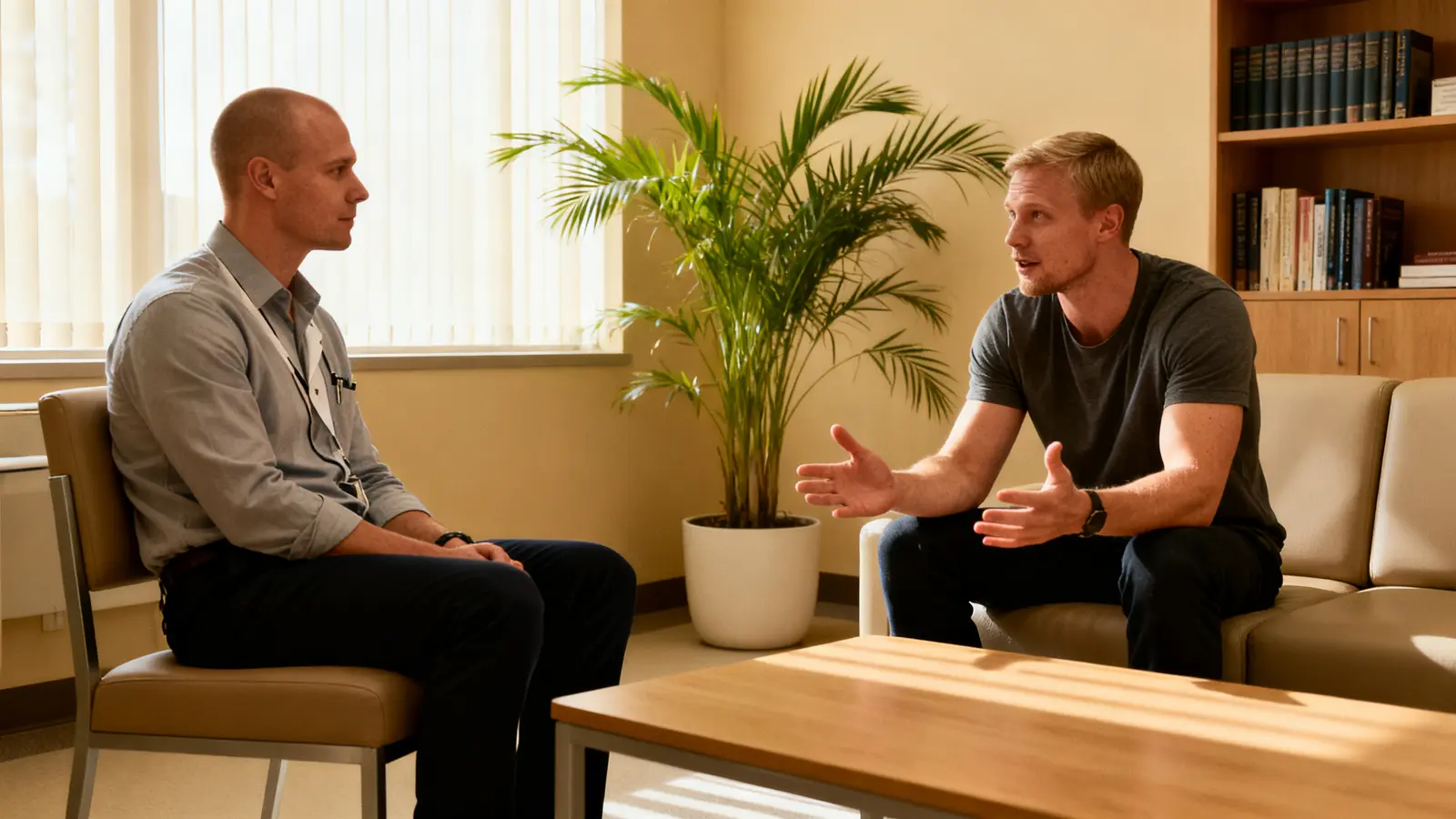
What a visit actually feels like
Two adults, a real conversation, enough time to get it right. →

Listened to, not processed
The first visit runs forty five to sixty minutes. →
Conservative about medication
A real chunk of our patients aren't on anything at a given time, because they don't need to be. When meds help, we use them honestly, and rushed appointments produce rushed clinical decisions, so ours don't rush.
Direct answers, no platitudes
You ask a direct question, you get a direct answer, not a risk management hedge.
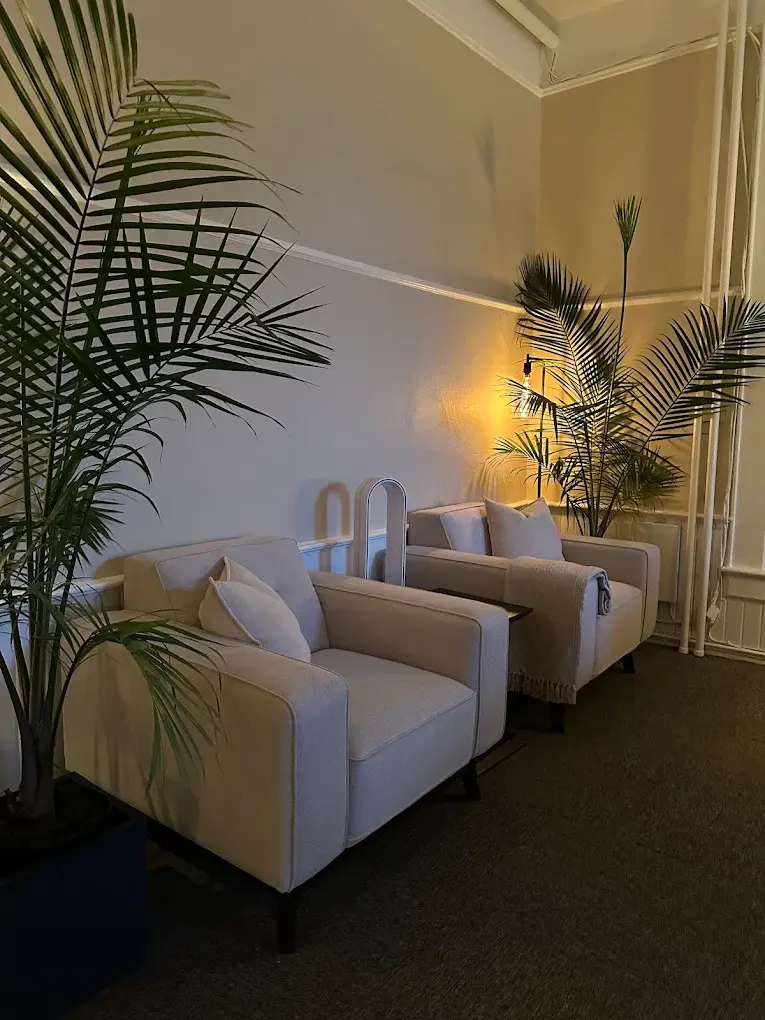
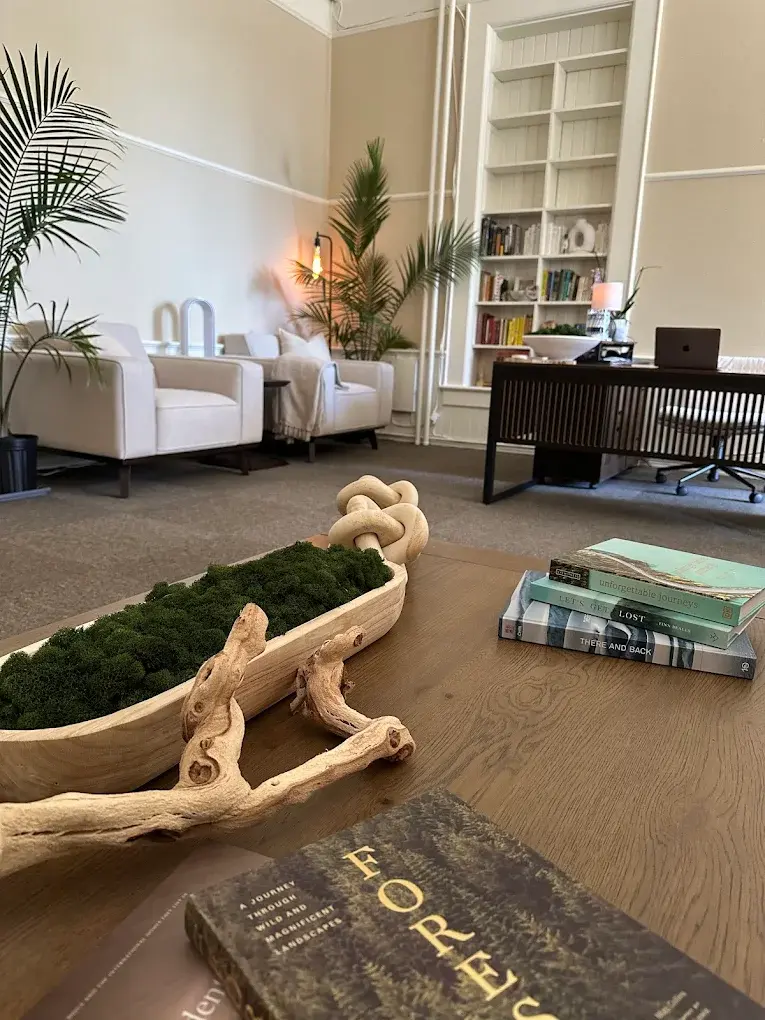
A calm room, not a treadmill
Built for the conversation.
Small on purpose
Small enough that the clinicians actually talk to each other about you.
Founded by Dr. Ragnar
Ragnar Scott, DNP. →
Vancouver WA plus telehealth across Oregon and Washington
Think this might be a fit?
A real person from our care team replies within a business day, and if you're in Bend or Spokane you don't have to drive four hours to make that happen.
Talk to a providerWhere this started
Dr. Ragnar started LiveWell after spending enough time inside the standard psych system to know what he didn't want to build. Too many places are set up to move people through fast, protect the chart, and hope the patient can survive the treadmill. LiveWell exists because that gets old, and because the gap between the care he wanted to give and the care the system made room for was way too wide.
The headquarters is in Vancouver, Washington, which is across the river from Portland and tends to get treated like a Portland suburb, but it’s its own identity and its own patient population. From there, telehealth covers Oregon and Washington, which means a guy in Bend or Spokane or Eugene can have the same conversation without driving four hours each way.
The other clinicians on the team were brought in because their actual clinical instincts match the model, not because they checked recruiting boxes. Different specialties, different ways of talking, same basic instinct about how to treat a patient, which is to talk to the person in front of you like an adult and tell them the truth, including when you don't know something.
How it's built
- Small on purposeThere's no plan to scale this into a national network, no private equity buyout, no investor deck.
- Vancouver WA plus telehealthHeadquartered across the river from Portland, seeing patients all over Oregon and Washington.
- Everybody knows the patientsIt works at this size because the team actually talks to each other. Grow past that and the care gets diluted.
What sets us apart
Four things we do differently
Visits long enough to think
Forty five to sixty minutes for the initial, and follow ups long enough to have a conversation instead of a status check. Rushed appointments produce rushed clinical decisions.
Conservative about medication
We don't reach for a script to end the appointment, and we don't write benzos like candy. We'll tell you honestly when something isn't a good idea long term, and we won't undermedicate out of false modesty either.
Direct answers, no platitudes
No therapist platitudes or risk-management hedges. A direct question gets a direct answer, because patients figure things out faster when you just tell them the truth instead of managing them.
Access that actually works
Message through the portal and it goes to your actual clinician, not some intake person who forwards it.
Who fits here
- Guys, 15 to 55Teens and grown men across Oregon and Washington, dealing with depression, anxiety, ADHD, sleep, alcohol, or stress that tipped into something more.
- Done with the millPeople who got processed instead of treated somewhere else and want a prescriber who actually reads what they sent.
- Willing to put in the effortMeds support the effort, they don't replace it. If you want a script with no questions asked, we're not your clinic.
Who we serve, and who we don't
The patient panel runs teens to men in their fifties, roughly fifteen to fifty five, mostly working guys in Oregon or Washington, dealing with some mix of depression, anxiety, ADHD, sleep problems, alcohol use, stress that’s tipped into something more, or some combination of all of the above. That's not because we exclude anyone else, it's just the population that tends to seek out this style of care and stick with it. The clinic also sees students and younger adults from roughly fifteen up, particularly around ADHD, anxiety, and the transition years where everything tends to come apart at once.
We're not, however, the right clinic for everybody. If you're looking for a prescriber who'll write whatever you ask for, or who'll keep you on something indefinitely without checking whether it's still working, or who won't push back on choices quietly making your life worse, you're going to be frustrated with us. The clinic is built for people who actually want to deal with what's going on, even when that's uncomfortable, and if that's not you, we're going to frustrate each other.
For acute psychiatric emergencies, severe psychotic illness requiring inpatient stabilization, or anything needing a hospital level of care, the right call is the emergency department or the local crisis line, not this clinic. We can pick up ongoing care once the immediate crisis is handled, but we're not set up to be the front line for a true crisis.